“You will grieve as long as you have the memory of that person, but when it becomes so intense and stops us from moving forward… that is Traumatic Grief.”
-My Prof.
No lie. When you lose someone, it’s like the world goes silent and immediately! Your mind begins to play back every. single. memory you’ve ever had with that person as if God himself hit the play back button on your life. Then you become frozen –unable to do much of anything besides… well, breathe. Breathe slowly, but deeply and intensely…
What is Traumatic Prolonged Grief Disorder:
- Separation from loved one by death is a threat to homeostasis and it triggers extreme and disabling reactions.
- It is then, a natural reaction to the permanent separation with marked and alarming difficulty in adjusting to the loss.
- Death of a loved one
- disruptive
- painful
- profound
- waves of pain
- emptiness
- loss of meaning
- enduring sense of absence
- fragmented memories of loved one
Symptoms of Traumatic Grief:
- Preoccupation with the deceased
- Preoccupation with the way the death happened
- Difficulty with positive reminiscing of the deceased
- Persistent yearning to be with the deceased
- Anger and bitterness related to loss
- Numbness
- Self-blame
- Loss of sense of vision for the future
- Confusion about one’s role in life
- Suicidal thoughts
- Marked difficulty accepting death
In short… Traumatic Grief is when the grief of a loved one’s death completely consumes you and disrupts your everyday functioning.
As we reviewed this in class, I thought about the many different ways we experience grief and it does not occur solely through the means of death. We can grieve over the loss of a long-time friendship, an ended relationship, not achieving life milestones, and even thoughts about how things could’ve been or should’ve been. We grieve over a variety of things and sometimes we allow it to linger far longer than we should, thus, making a home for it within us.
Getting through the grieving process is never a matter of forgetting someone, but rather, realizing that YOU are still here. When we endure losses, we can become so disconnected and removed from where we presently are. After losing a loved one, fear settles in and death no longer stands as our horror –LIVING does. I remember taking a Death, Dying, and Bereavement course in college and the first thing my professor said was, “I want to tell you right now, this class has nothing to do with death and everything to do with life.” We must learn to live life to the FULLEST to begin to accept the reality of death.
Then I thought of the Black community –how there is such an emphasis on commemorating the life of someone whose passed on. I thought about the many faces I’ve seen on t-shirts, hoodies, and other paraphernalia, all in remembrance of this person and I couldn’t help but think… whom among these people suffer from Traumatic Grief and have no clue? Sometimes pain doesn’t look like pain… it disguises itself in dressing well, living lavish, staying busy, working all day, joking, posting “fake-happy” pics on social media, but man oh man is it there.
Sometimes someone’s “livin’ my best life” is really all they have left OF life.
-Sa.
Death, of any form, is the common experience. No one can ever prepare for it and the grief that follows cannot always be contained. However, my belief is that with every new transition, comes an opportunity to go through a process of re-invention and re-building of the self. So cry all the tears you need to cry, scream, exercise, pray or meditate –but do not remain in the shadows of grief because you are still here. You are still here.
Resources for Grief
The Cover Center for Grieving Children
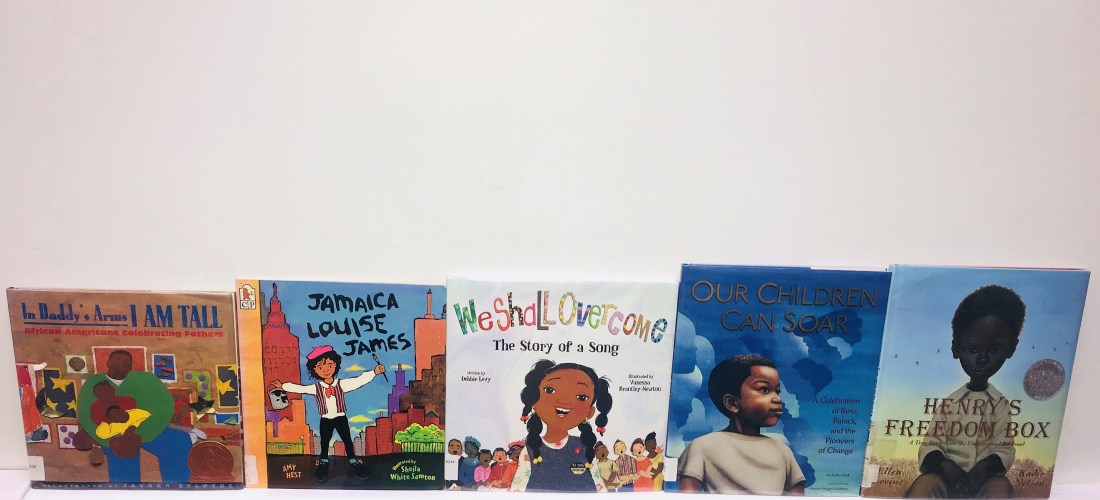
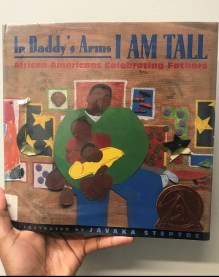 This book is a mass collaboration of poems written by 12 different authors. Each poem takes a different approach in talking about fathers, but they all highlight the importance of a father’s presence. Every illustration provides the necessary visuals to bring each written piece to life for the reader. Unfortunately, the narrative that has been written for African-American fathers in America has not been of positive discourse and that has to change… particularly because there has been little to no efforts in showing the other side. What is the other side you ask? Well the one that consists of Black fathers who exemplify everything in this book: supportive, loving, hard-working, compassionate, reliable, and the strongest people we know. That is who I know. That is my brother, your brother, your dad, cousin, uncle etc. Today, I am happy to see social media pages who’ve taken on the task to appropriately celebrate our fathers, and I am even more touched to see movements like The Black Man Can –which focuses on educating, inspiring, and celebrating boys and men of color. See more here:
 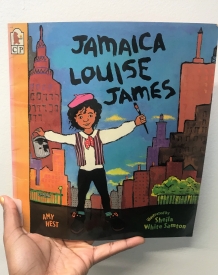 Okay, so first off can we talk about what a DOPE name this little girl has!? It was the first thing I saw and of course her stylish apparel. Jamaica is an 8-year-old artist who enjoys drawing the many things she sees along the New York City streets. On her birthday, her mom and grandma gift her with a paint set and she is ecstatic. Her grandma works down in the subway station on 86th and Main veerrryyy early in the morning, and sometimes Jamaica peers out her window and watches her go down the steps to the underground world. One thing she can’t stand is how lifeless and bland the walls are down in the subway station… so she has a very special idea of how she can spice things up! This story is playful, colorful, and inspiring. It demonstrates the importance of nurturing children’s gifts and giving them the freedom to be creative and think for themselves. You feel the passion Jamaica has for art in every page of this book, and her close-knit family reminds us of our own. A fun and humorous read that will instantly stimulate imagination.
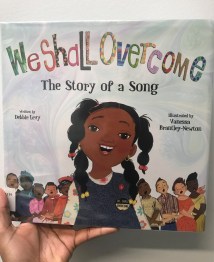 This book tells of the history of a song we all should know, We Shall Overcome. This song stood as the anthem during the civil rights movement of the 1960’s, yet dates all the way back to slavery. During the slavery era, our people had nothing to call their own –except their song. With each day, they endured more and more cruelty and oppression… but they still sang. There is something really special about music and singing that can release a multitude of emotion and speak for us when we cannot. Not surprisingly, this song reached all across the world to other countries where people were faced with adversities. This song has not only crossed borders, but also color, creed, race, and religion. While it stands as the foundation hymn for African Americans in their fight for equality, it also serves as an invitation to all people of all backgrounds to join in on the fight. We are always stronger together and every link matters… this book conveys that exact message.
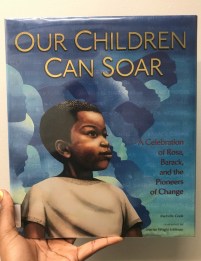 George Washington Carver, Jesse Owens, Hattie McDaniel, Ella Fitzgerald, Jackie Robinson, Rosa Parks, Ruby Bridges, Martin Luther King Jr., Thurgood Marshall, and Barack Obama are all featured as the Pioneers of Change in this book. It is so important for children to be aware of the history of their people and how far we’ve come. Dr. Carter G. Woodson, the scholar and historian called “the Father of Black History,” once said “those who have no record of what their forebears have accomplished lose the inspiration which comes from the teaching of biography and history.” It’s almost like not knowing who your family is… who you are, why you are the way you are, why you do things the way you do, why you LOOK the way you do. Family ties tell us a lot about ourselves whether we like it or not, and furthermore, so do our ancestors. Personally, being aware of the struggle people of both my race and ethnicity (Haitian) have experienced, gives me the motivation to be my best self every. single. day. I am encouraged to be a positive example and mentor for the next generation of black children. Our children can soar, and they WILL soar, as long as we equip them with the knowledge and tools to do so. An inspiring and hopeful read.
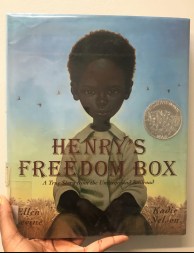 WOW. WOW. WOWWWWWW!! Do you know about the story of Henry “Box” Brown!? The man who MAILED himself to freedom! Well, if you don’t I suggest you read this book. I never heard of this man prior to reading this book and I am honestly sitting here wondering how this got past me. This is a true story about a man born into slavery who loses everything he loves, and immediately makes a radical decision to ship himself to freedom by traveling in a wooden box. Your eyes will be glued to each page as the story unfolds and you will probably finish the book sooner than you expect because it’s just THAT GOOD, but please don’t rush through it! It makes you think… the amount of persecution and abuse slaves faced must have been unimaginable, to the extent that they desired to be birds, whom –at times flew aimlessly– but still flew freely. Freedom was the answer and Henry knew that in order to get it, he had to potentially risk his life in the process. In life, sometimes we have to put ourselves in uncomfortable positions to achieve great things. This story calls attention to the ambition and conviction that Henry possessed –which also lives within us.
 sweetSARendipity